

Closing the gap in MSK outcomes
Persistent pain isn't a body problem—it's a brain problem. Healing Track delivers clinically proven, cost-effective, brain-based treatment at scale.
The Challenge
Chronic pain is costly—for patients and organizations
0.0M1
Americans suffer from chronic pain, with 55.9M having neuroplastic pain that can be treated with PRT
$0B1
Annual healthcare costs for chronic pain in the United States
Up to $0K5
Estimated lifetime healthcare costs per chronic pain patient
Conditions persist for years
Chronic pain conditions frequently last years or even decades, leading to ongoing treatment costs and diminished quality of life.
Widespread health impacts
Chronic pain negatively impacts sleep, cognitive function, mental health, cardiovascular health, sexual function, and overall quality of life.
The Gap
Why traditional MSK solutions fall short
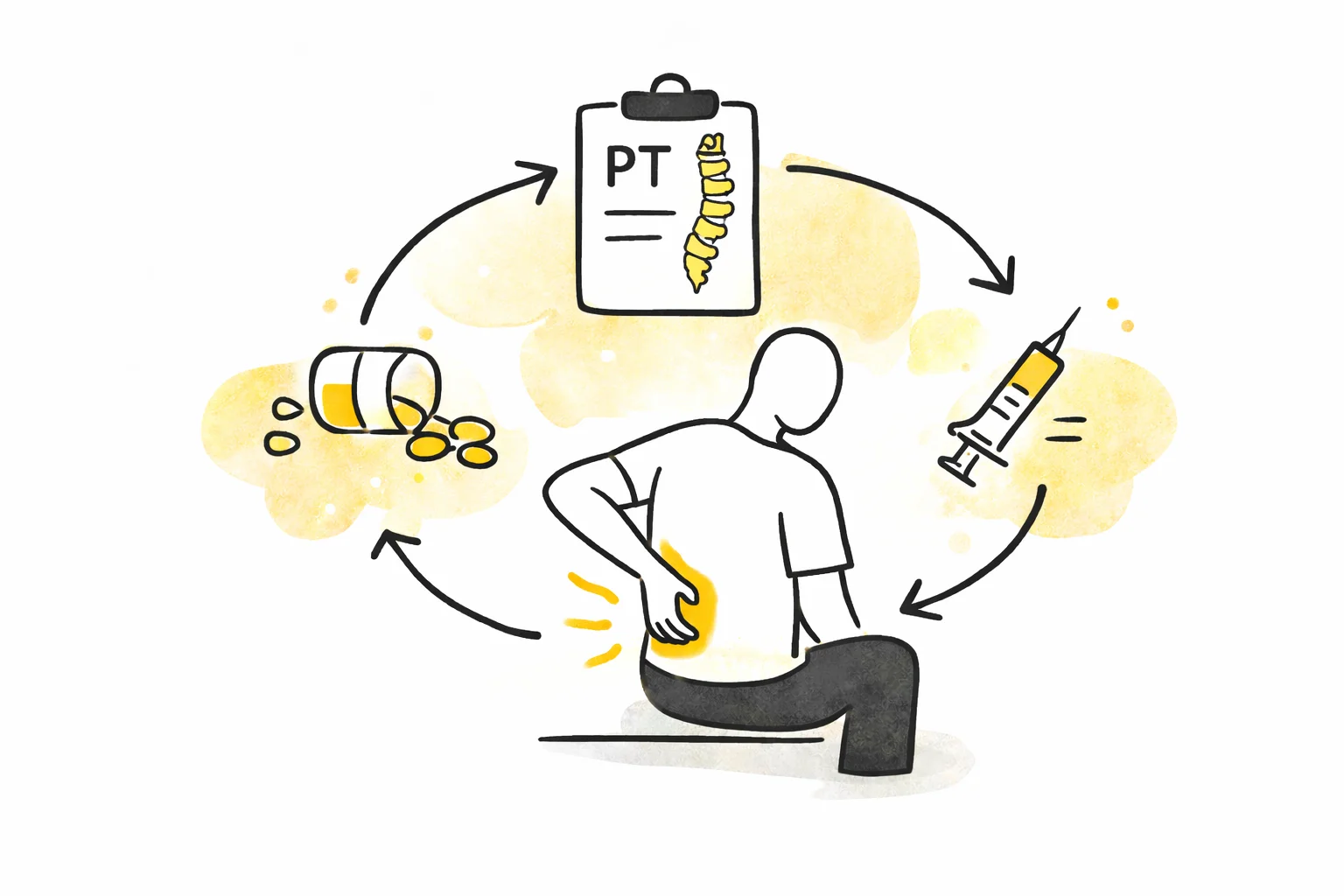
Physical therapy and movement-based programs work well for acute injuries. But research shows that 85% of chronic back pain has no identifiable structural cause.2–4
This is neuroplastic pain—real pain generated by learned pathways in the brain, not structural problems in the body. For patients with neuroplastic pain, more PT won't help. Neither will injections, surgery, or pain medication. They need a fundamentally different approach: one that retrains the brain.
Healing Track complements your existing MSK program by addressing the patients it can't reach—chronic pain sufferers who cycle through treatments without lasting relief.
Outcomes
Measurable results
66%6
Pain-free or nearly pain-free
after completing the program
98%6
Improvement rate
compared to placebo
5 yrs7
Sustained results
maintained at follow-up
Benefits
Why choose Healing Track

Reduce Healthcare Costs
Chronic pain accounts for $531 billion¹ annually in medical treatment costs. Healing Track offers a clinically proven, cost-effective alternative to ongoing medication and interventional procedures.

Decrease Opioid Dependency
By addressing the neurological root cause of chronic pain, PRT helps reduce or eliminate reliance on pain medications, improve workplace safety, and minimize liability.

Improve Productivity
Chronic pain is a leading cause of absenteeism and presenteeism. PRT can create significant improvements in daily function and work capacity.

Offer Access at Scale
Healing Track's self-paced digital program can be deployed across your entire population without the scheduling constraints or high cost of in-person therapy.
Clinical Evidence
Published research and clinical validation
Pain Reprocessing Therapy is supported by rigorous peer-reviewed research published in leading medical journals.
JAMA PsychiatryJanuary 2022
· Landmark StudyEffect of Pain Reprocessing Therapy vs Placebo and Usual Care for Patients With Chronic Back Pain: A Randomized Clinical Trial
Ashar, Y. K., Gordon, A., Schubiner, H., et al.
The landmark NIH-funded trial demonstrating PRT's efficacy. 66% of participants were pain-free or nearly pain-free after treatment, compared to 20% for placebo and 10% for usual care. Results maintained at 1-year follow-up.
Read the studyJAMA PsychiatryOctober 2025
Pain Reprocessing Therapy vs Placebo and Usual Care for Patients With Chronic Back Pain: 5-Year Follow-Up of a Randomized Clinical Trial
Ashar, Y. K., Gordon, A., Schubiner, H., et al.
Long-term follow-up showing durable results. Participants maintained significant pain relief five years after the original four-week treatment, with some reporting complete resolution of chronic back pain.
Read the studyThe Journal of PainSeptember 2023
"I don't have chronic back pain anymore": Patient Experiences in Pain Reprocessing Therapy for Chronic Back Pain
Tankha, H., Lumley, M. A., Gordon, A., et al.
Qualitative analysis of patient experiences revealing how PRT leads to pain relief through fear reduction, understanding the pain-emotion connection, and therapeutic relationships.
Read the studyReferences
- 1.Guy GP Jr, Miller GF, Legha JK, Rikard SM, Strahan AE, Mikosz C, Florence CS. Economic Costs of Chronic Pain — United States, 2021. Med Care. 2025 Sep 1;63(9):679–685. doi: 10.1097/MLR.0000000000002181. Epub 2025 Jul 3. PMID: 40730349.
- 2.Dahlhamer J, Lucas J, Zelaya C, et al. Prevalence of chronic pain and high-impact chronic pain among adults — United States, 2016. MMWR Morb Mortal Wkly Rep. 2018;67(36):1001–1006.
- 3.Schubiner H, Lowry WJ, Heule M, et al. Application of a clinical approach to diagnosing primary pain: prevalence and correlates of primary back and neck pain in a community physiatry clinic. J Pain. 2024;25:672–681.
- 4.Hashmi JA, Baliki MN, Huang L, et al. Shape shifting pain: chronification of back pain shifts brain representation from nociceptive to emotional circuits. Nat Neurosci. 2013;16(7):836–843.
- 5.Gatchel RJ, Okifuji A. Evidence-based scientific data documenting the treatment and cost-effectiveness of comprehensive pain programs for chronic nonmalignant pain. J Pain. 2006;7(11):779–793.
- 6.Ashar YK, Gordon A, Schubiner H, Uipi C, Knight K, Anderson Z, Carlisle J, Polisky L, Geuter S, Flood TF, Kragel PA, Dimidjian S, Lumley MA, Wager TD. Effect of pain reprocessing therapy vs placebo and usual care for patients with chronic back pain: A randomized clinical trial. JAMA Psychiatry. 2022;79(1):13–23.
- 7.Ashar YK, Low EL, Knight K, Schubiner H, Gordon A, LeRoux A, Lumley MA, Wager TD. Pain reprocessing therapy vs placebo and usual care for patients with chronic back pain: 5-year follow-up of a randomized clinical trial. JAMA Psychiatry. 2025;82(10):1049–1051.
Ready to learn more?
Contact us to discuss how Healing Track can help reduce chronic pain costs and improve outcomes for your organization.